


Enterprise Chatbots in 2026: From Answering Questions to Actually Getting Things Done
If you’re still thinking of enterprise chatbots as those awkward pop-up boxes that spewed out three generic responses before saying “let me connect you to a human,” then you’re looking at old news. The kind of enterprise chatbots that are taking over today look nothing like what we had two years ago. We’re talking about bots that don’t just talk. They actually work.
That’s the true story of enterprise chatbots in 2026. Not that companies are “exploring” chatbots or “testing the waters.” That boat has sailed. Roughly 78 percent of large enterprises are already deploying chatbots over at least one key workflow. The question that companies are asking at this point isn’t whether they should get a chatbot. It’s how far they can take it into their real-world operations.
So let’s talk about what’s actually going on, why it matters, and what it means if you’re looking to build or deploy an enterprise chatbot that does more than simply have a conversation. And if by the end of this, you’re ready to actually build one, tools like Chatbot Builder are making that process a lot more accessible than it used to be.
The Age of “Doing Bots” Has Arrived
There is a clear way to articulate the change that is taking place in the present moment. For many years, the enterprise chatbot was designed to respond. You asked a question, and the bot provided you with an answer, and that was the end of it. It was useful, yes. But it was also very limited.
The bots that are winning in 2026 are designed to do. They don’t just tell you how to reset your password. Instead, they reset it for you. Rather than simply explaining your company’s refund policy, they check your purchase history, verify the return window, print a shipping label, and initiate the refund process without your involvement.
This is no small improvement. This is an entirely new paradigm for thinking about what a chatbot can be in a company. The industry buzzword that people just can’t stop throwing around is “agentic,” and for once, the buzzword actually lives up to the hype. These tools are capable of taking a task, working out the steps to complete it, gathering information from multiple platforms, and seeing it through to the end.
What this looks like on a serious scale was demonstrated by Klarna. Their chatbot processed about 2.3 million conversations in a month, equivalent to the work of 700 full-time agents, and their customer satisfaction ratings were not impacted. This is not a pilot. This is an enterprise chatbot operating as a business-essential system.
Why Enterprise Chatbots Are Different from Regular Chatbots
This is a gap that a lot of people don’t fully understand, and it’s more important than most blog posts have let on.
A regular chatbot is designed for one purpose. It answers customer FAQs, it captures leads, or handles appointment bookings. It does one thing, and it does it in a vacuum. An enterprise chatbot is designed to integrate with the systems that are already in place and running the business.
But the final bit is important. Most consumer-facing chatbots can read data. Enterprise chatbots can read and write. When a customer changes their insurance policy via a chat interface, a well-designed enterprise chatbot will not only confirm the change. It will also update the system, send a confirmation email via the marketing system, and record the exchange in the compliance database, all simultaneously. No data is resting in one place while another system is left in the dark.
Security is another huge difference, and this is where the big boys separate from the ones that just throw a chatbot on their website and say, “Hey, look, we have a chatbot!” Enterprise chatbots handle sensitive business information and customer data on a daily basis. This means they have to comply with certain standards, such as SOC 2, HIPAA, or GDPR, depending on the industry. They also have to support something called role-based access control, which sounds like a lot of mumbo-jumbo but is actually just plain old common sense. When a low-level employee asks the chatbot for revenue information for the quarter, the chatbot has to know if that employee is actually authorized to see that information before it responds.
The Use Cases That Are Actually Moving the Needle
Let’s talk about the practical applications. These are the use cases that are actually moving the needle for enterprise chatbots right now.
Customer Support, but Smarter
Customer support is still the largest use case, but it looks very different. We’re beyond the days when “deflection rate” was the only metric that mattered. Today, it’s all about the resolution rate. Can the chatbot actually solve the problem, or is it just passing the buck to a human customer support agent? The best enterprise chatbots of 2026 are acting as first-line agents who have access to the backend systems and are resolving the problem end-to-end.
Internal Operations and Employee Support
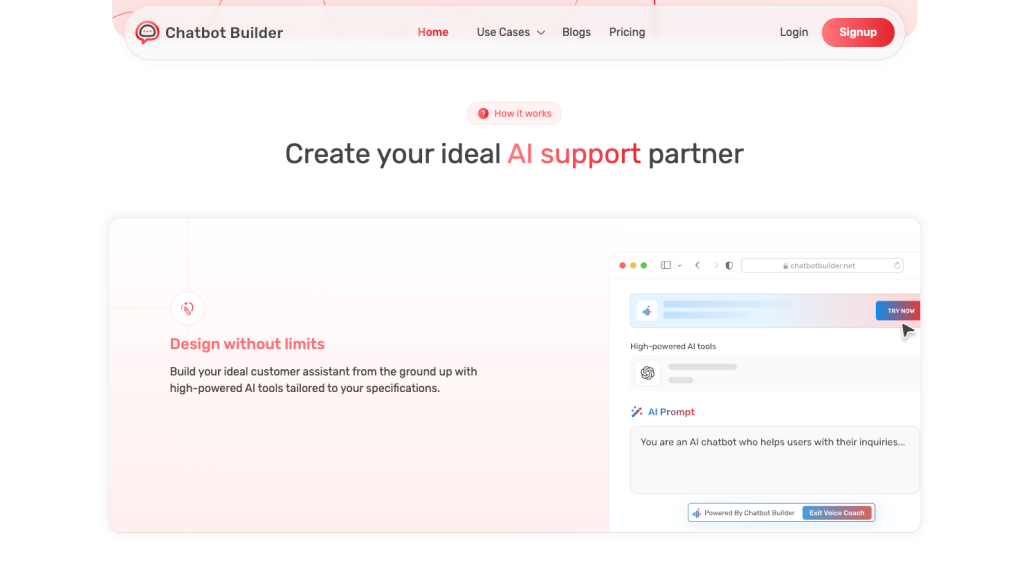
This one operates under the radar, but it may be where the biggest ROI is lurking. By creating a chatbot that assists your own employees, you’re reducing the type of busywork that holds every team back. HR inquiries, IT support, onboarding procedures, expense reporting advice. One effective internal chatbot can answer thousands of routine questions without anyone having to send an email or hold a phone call. The best part? Creating one no longer requires a staff of developers. Services like Chatbot Builder allow you to train your bot using your own company files, FAQs, and product knowledge, and have it up and running without writing a single line of code. You upload your files, the bot learns about your company and your procedures, and it begins answering questions on its own.
Sales and Lead Qualification
About 63 percent of B2B businesses are now employing chatbots for qualifying leads, and the results speak for themselves. Chatbots engage your website visitors, ask the right questions, determine where the visitor is in the buying process, and then deliver the qualified leads to your sales team at the precise moment. No more time wasted on cold leads.
Proactive Outreach
The smartest enterprise chatbots aren’t waiting for customers to come to them. They’re initiating conversations at strategic moments. Think abandoned cart recovery, re-engagement campaigns for dormant users, or timely check-ins based on user behavior. Modern chatbots can detect when a visitor has been browsing product pages for several minutes and jump in with personalized assistance. They can reach out to existing customers with relevant upsell opportunities based on purchase history. The key difference from traditional automated emails? These interactions are conversational and two-way, allowing customers to ask questions and get immediate responses rather than just receiving a one-sided message.
What Makes or Breaks an Enterprise Chatbot Rollout
Creating a chatbot for an enterprise that actually works and provides results is not as easy as choosing a platform and switching it on. The companies that understand how to do it right are doing a few things that the ones that struggle are not.
Start with the Workflow, Not the Technology
They begin with the workflow, not the technology. Before selecting the tools, the successful teams take the time to identify the processes they want to automate. They look for the areas where people are doing the same thing over and over, and they design around those pain points. It’s starting with the shiny object and looking for a problem to solve for it, which gets you the chatbot that nobody uses.
Prioritize Integration from Day One
They think about integration from day one. An enterprise chatbot that can’t talk to your CRM, your ticketing system, or your ERP is basically a dead end. The real value comes when the bot can pull information from and push updates to the systems that run your business. If that integration layer isn’t solid, the whole thing falls apart pretty quickly.
Keep Humans in the Loop Where It Matters
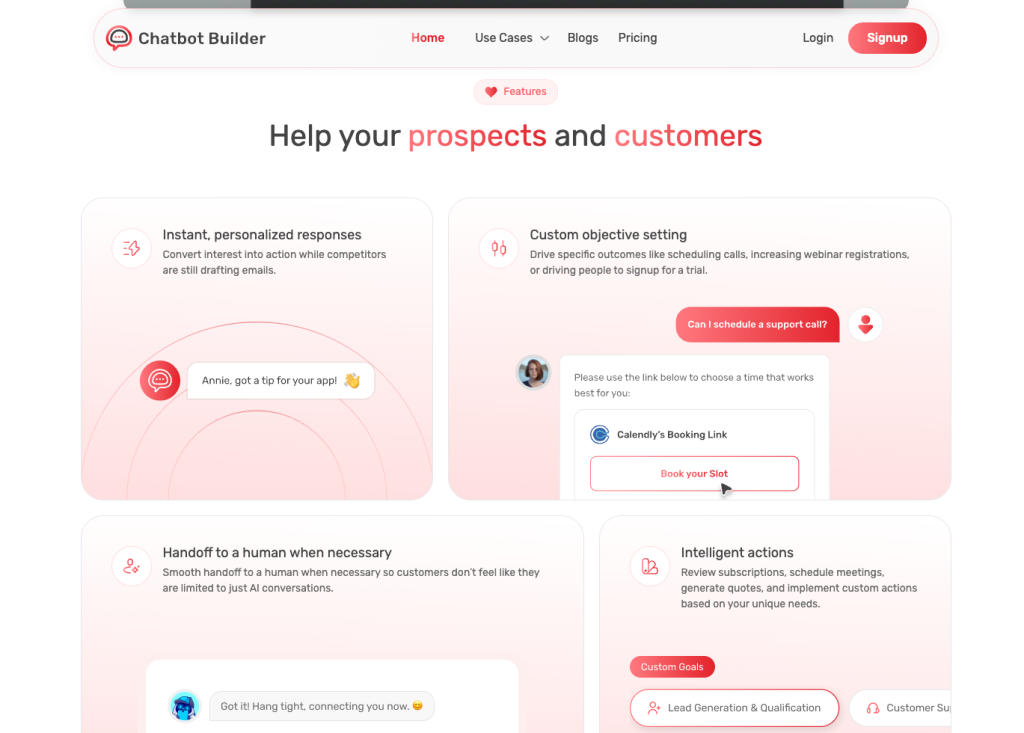
They keep humans in the loop where it matters. No one is saying that enterprise chatbots have to be able to do everything on their own. The best strategy is to determine which things the chatbot can completely own, which things require a human in the middle, and which things should go directly to a human. A good chatbot knows when to hand off, and it does it seamlessly so that the customer doesn’t feel like they’re being passed around. Chatbot Builder, for example, is designed with this same logic in mind. It has a handoff function that puts the conversation in the hands of a live person at the right time.
Measure What Actually Matters
They measure the right things. Vanity metrics such as “number of conversations” are not very informative. What you want to know is how much time the bot is saving, what the resolution rate is, and how it impacts the cost of support or operations. If you can’t measure it, you can’t improve it.
The Numbers That Tell the Story
The market data backs up what we’re seeing on the ground. The global enterprise chatbot market is sitting around $10 to $11 billion in 2026, and it’s expected to hit $27 billion or more by 2030. That’s not a niche trend. That’s a core part of how businesses are spending their tech budgets.
The companies that have put in place enterprise chatbots are seeing a cost savings of 30 to 40 percent in their support operations. Some of these companies are seeing returns on investment of over 300 percent in the first year. The cost per interaction for a chatbot is $0.50, while that of a live agent is $6.00 for the same request. The calculation is quite simple.
And it’s not just about saving money. The conversion rates are also increasing by 20 to 35 percent when chatbots are involved in the customer journey. That is revenue, not just savings.
Where This Is All Headed
If you want to know what the future of enterprise chatbots will look like in six months, just look at what is already in pilot today. Multi-agent systems, where multiple specialized chatbots work together to accomplish complex tasks, are moving very quickly from proof-of-concept to production. Voice-enabled enterprise chatbots are also growing very quickly, with a large portion of new implementations including voice functionality.
Meeting Customers Where They Are
The other major change is related to where these bots reside. Customers do not only want to communicate with companies on a website anymore. They are on WhatsApp, Instagram, Telegram, SMS, and Facebook Messenger, sometimes all at once in the same week. Enterprise-level chatbots that can only operate on one platform are already being left behind. Tools such as ChatbotBuilder.net are tackling this problem directly, providing bots that operate on all of these platforms simultaneously from a single installation. You build it once, and it will work everywhere your customers actually are. Their AI Coach feature takes this a step further by being a smart member of staff who manages conversations on multiple channels while pursuing a specific business objective, such as making calls or increasing sign-ups, not just answering queries.
The Widening Gap
The companies that are working on building chatbots with an eye towards these kinds of abilities are going to be in a completely different position than the ones that are still trying to figure out how to automate FAQs. The difference between “we have a chatbot” and “our chatbot can actually execute workflows” is going to grow.
Take Action Now
Enterprise chatbots in 2026 are no longer the future. They are the present. The only question is how quickly your business is moving to take advantage of them.
If you’re ready to stop talking about enterprise chatbots and actually build one, Chatbot Builder is worth a serious look. No coding needed, a 14-day free trial, and support for every major channel your customers use. You can be up and running faster than you think.
Frequently Asked Questions
Enterprise Chatbot: An enterprise chatbot is an advanced conversational interface designed to function in a large-scale business environment, integrating with internal systems such as CRMs, ERPs, and ticketing systems to perform complex tasks and workflows, which go beyond the scope of simple question-answering.
Typical chatbots perform a single task alone, such as responding to FAQs. Enterprise chatbots work across multiple departments, perform multi-step processes, and both read from and write to your current business systems.
The price range is extremely variable depending on the complexity, number of integrations, and the platform you decide to use, but most enterprise implementations will be between $50,000 and $500,000.
No, and the best ones aren’t built to. They take care of the high-volume, mundane work so your human agents can concentrate on the complex, nuanced cases that actually require a human touch.
A well-designed enterprise chatbot usually takes three to six months from the time of scoping to complete deployment, depending on the number of systems that need to be integrated and the complexity of the workflows.