


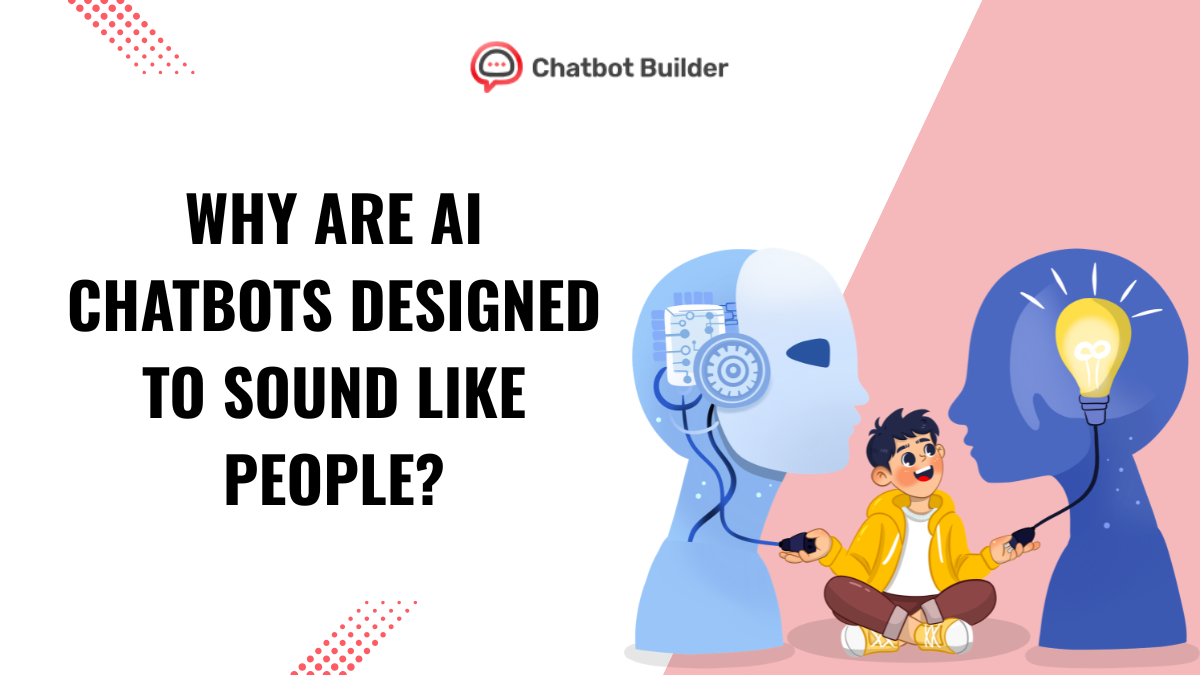
Why Are AI Chatbots Designed to Sound Like People?
Last week I was booking a hotel room. Got stuck on a question about late checkout, nothing major, just needed a quick answer before I confirmed the reservation.
Typed it into the chat box on their site.
The response came back in maybe four seconds. Answered exactly what I asked, friendly tone, even offered to flag my request with the front desk. I finished the booking without thinking twice.
It wasn’t until later that I realized I probably wasn’t talking to a person at all. And honestly? Didn’t bother me one bit. The conversation worked. That’s really all I needed.
That’s the whole thing with AI chatbots. Most businesses still haven’t figured that out.
Nobody Lands on Your Site Hoping for a Robotic Experience
Think about where someone’s head is at when they open a chat window.
They’ve already got six tabs open. Probably on their phone. Maybe a little annoyed they couldn’t find the answer themselves. They want it resolved fast, and they want to move on.
So when the first message they see is “Welcome! Please select a category from the options below”, that’s it. Eyes glaze over. Half of them close the window right there.
Flip it. First message is “Hey, what can I help you sort out today?”, suddenly there’s a conversation. The person types back. Things move forward.
Same technology. Completely different result. Just because one sounds like a person and the other sounds like a form.
We’re genuinely wired to respond to human language differently from system language. Psychologists call it anthropomorphism, the tendency to assign human qualities to non-human things. You’ve done it with your car. That one houseplant you felt guilty about not watering. AI chatbots that are designed well just lean into that instead of fighting it.
The Real Reason It Sounds Human (Nobody Talks About This Enough)
The reason AI chatbots sound like people is that everything else has been tried first. And everything else failed.
Remember automated phone systems? Press 1 for billing, press 2 for support, press 3 to repeat these options while your soul slowly leaves your body. People despised those. Not because they wanted a human for every little thing, just because being processed like a ticket number feels bad.
Then the first chatbots showed up. Keyword matching. You’d type a question, and if it didn’t contain exactly the right word, you’d get “Sorry, I didn’t understand that. Please rephrase your question.” Over and over. Maddening.
People hated those even more.
So at some point, the people building these things started actually watching how humans talk to each other. What makes a conversation feel okay? What makes someone feel heard versus ignored?
Turns out it’s not complicated. Conversations feel okay when they flow like conversations. When someone responds to what you actually said, not a keyword they pulled out of it. When the back and forth feels natural instead of scripted.
That’s the whole discovery. Not groundbreaking. Just obvious once you stop overcomplicating it.
Human-sounding language isn’t some premium feature they bolted on. It’s the minimum requirement. Without it, nothing else works.
What It Actually Costs You When Your Bot Sounds Like a Bot
Let me be specific here because I think a lot of business owners hear this and nod along without really sitting with it.
It’s 10:30 at night. Someone’s on your site. They’re genuinely interested, not just browsing, actually considering buying. One question stands between them and a decision. Nothing complicated. Just something the FAQ doesn’t quite cover.
They open the chat. Type their question. “I’m sorry, I didn’t understand that. Please rephrase your question.”
Tab closed. They’re on your competitor’s site thirty seconds later. The competitor’s bot answers it. They buy there.
You’ll never know what happened. Your analytics won’t show a lost sale. Just another bounce.
That’s not a rare edge case. That’s playing out on thousands of business websites tonight while the owners sleep, thinking they’ve got customer service covered because they turned a chatbot on three months ago.
There’s a massive difference between having a chatbot and having one that actually does its job. That gap almost entirely comes down to whether it sounds like a person or a system.
It’s Doing More Than Just Sounding Nice
Here’s what most people miss about this.
When AI chatbots are designed to sound human, the whole shape of the conversation changes. It’s not just a friendlier coat of paint on the same broken logic underneath.
Real conversations have subtext. If someone says, “I’m not sure this is worth the price for me,” they’re not asking for a pricing page. They’re telling you something is holding them back. A good human salesperson would pick up on that immediately. They’d ask what’s making you hesitate, figure out the real concern, and address that.
Decent AI chatbots do the same thing now. They respond to where someone actually is in their thinking, not just the literal words they typed.
There’s the memory thing, too. A good bot holds the thread. You told it you have a fifteen-person team two messages ago; it shouldn’t ask you again two messages later. Sounds minor. It’s not. That’s the exact moment a conversation stops feeling like a conversation and starts feeling like a form that keeps resetting on you.
And every word the bot says is your business talking. The tone it uses, how it handles someone who’s frustrated, whether it sounds confident or wishy-washy about your own product, all of that adds up to an impression. Most businesses genuinely haven’t thought about this carefully enough.
One Thing Worth Being Straight About
The goal isn’t to fool anyone into thinking they’re talking to a human.
Good AI chatbots don’t hide what they are. A bot saying “Happy to help!” isn’t deceiving anyone. It’s just not being robotic for no reason.
Most people are completely fine talking to a bot. What they’re not fine with is a bot that wastes twenty minutes of their time going in circles and never actually solves anything. That’s what breaks trust, not the fact that it’s automated.
Why So Many Chatbots Are Still Terrible
This happens constantly, and the pattern is always the same.
The business owner decides they want a chatbot. Signs up for a tool. Gets through the setup wizard. Turns it on. Goes back to running their business.
Three months later, someone mentions the bot’s been giving wrong answers for weeks, and nobody noticed.
The platform gave them a chatbot. Didn’t give them a good one.
Getting AI chatbots to actually work, to sound like your brand, know your products properly, handle the weird questions that fall outside the obvious categories, and know when to bring in a real person, that stuff requires actual thought going in. What does the bot know? How does it speak? What happens when it hits something it can’t handle?
Most out-of-the-box setups leave all of that unanswered. What you end up with is a slightly more interactive FAQ page. Technically, a chatbot. Practically just noise.
What chatbotbuilder.net Does Differently
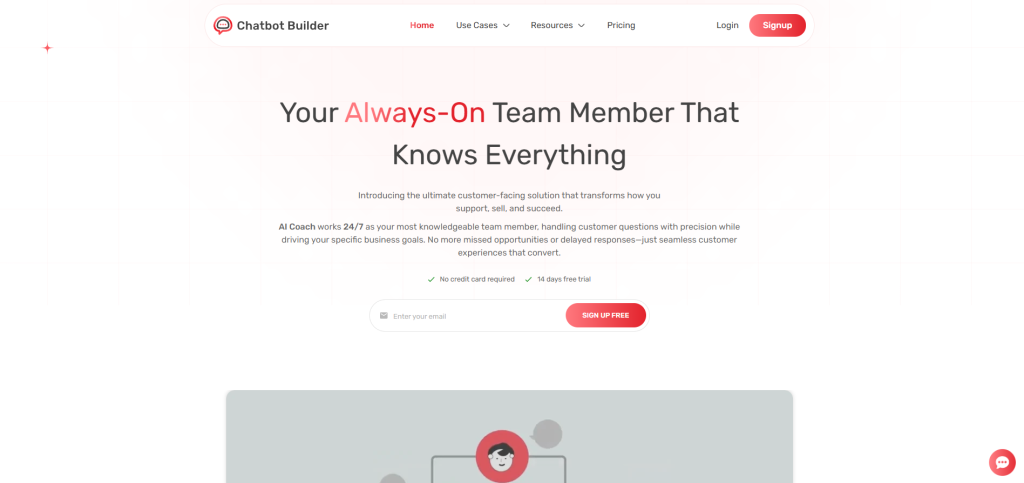
Chatbotbuilder.net was built on one idea: that small businesses deserve AI chatbots that actually work, without needing a developer or a runway to build them.
You train it on your actual stuff. Product pages, past support conversations, your docs, your FAQs. It learns your business, not generic filler responses that could belong to any company in any industry.
You control how it sounds. Give it a name, set the tone. That voice stays consistent across every single conversation.
Building conversation flows doesn’t require code. Want it to qualify leads before passing them to your sales team? Done. Collect an email at a certain point? Easy. Handle refund requests in a specific way? You set it up in a visual builder.
It goes everywhere your customers are. Website, WhatsApp, Facebook Messenger, SMS. One bot across every channel.
When a conversation needs a real person, the handoff is clean. No loops, no lost context, no frustrated customer who has to explain everything again from scratch.
And you can see what’s actually happening. Which questions are coming up most. Where people are dropping off. How the bot’s performing week over week.
The result is a bot that sounds like it belongs to your business, because it was built around your business.
Getting the Tone Wrong Is Worse Than Having No Bot at All
This doesn’t get said enough.
A bad chatbot doesn’t just fail to help. It actively damages how people feel about your company.
Overly casual bot on a legal or financial site, people get nervous. Stiff, formal bot on a brand that’s supposed to feel warm and approachable, the whole company feels cold by association. A bot that responds to a genuinely frustrated customer with “Great question! Here are some resources that might help!”, people want to throw their phone across the room.
Tone mismatch is real. And it’s completely preventable if you just think about it before you build rather than after.
The businesses that get AI chatbots right treat the bot the way they’d treat a new hire. What does it need to know? How should it speak to customers? What can it handle alone, and when does it need backup? That framing changes the whole outcome.
Where That Leaves You
AI chatbots are built to sound like people because that’s what works. Robotic interactions push people away. Natural ones keep them around. That’s not really a design philosophy; it’s just human nature showing up in a chat window.
The tech is genuinely good right now. Better than most business owners realize. The thing holding most businesses back isn’t the AI; it’s that nobody set the bot up with enough thought to actually let it do its job.
Chatbotbuilder.net handles that part. You know your business. The platform handles everything else. The 14-day free trial is the full product, no stripped-down demo, no sales call required. Build the bot, point it at real visitors, and see what changes when your website starts actually having conversations.
Frequently Asked Questions
It signals that the conversation is going somewhere. People stay longer, share more, and get what they actually came for. The tone isn’t cosmetic; it changes whether the interaction works at all.
There’s a difference between communicating naturally and pretending to be a person. Good AI chatbots don’t hide what they are. They just don’t sound broken and robotic for no reason. Honesty and good communication sit comfortably next to each other.
Yes. There are platforms built specifically for business owners without a technical background. ChatbotBuilder.net is one. You bring the product knowledge and the brand voice. The platform handles the rest. Most businesses have something live and working within a few days of starting.
Handle it without making the person feel like they’ve hit a dead end. A well-configured bot acknowledges the gap, offers a useful next step, grabs contact info for a follow-up, points to a specific resource, and, when it needs to, passes the conversation to a human without losing everything that was already discussed. That handoff moment is one of the most important things to get right.
Chatbot Builder is flexible enough to build something that’s genuinely yours, simple enough that you don’t need help doing it. Train it on your content, shape how it sounds, deploy across channels, and watch the analytics. All in one place, no code required.