


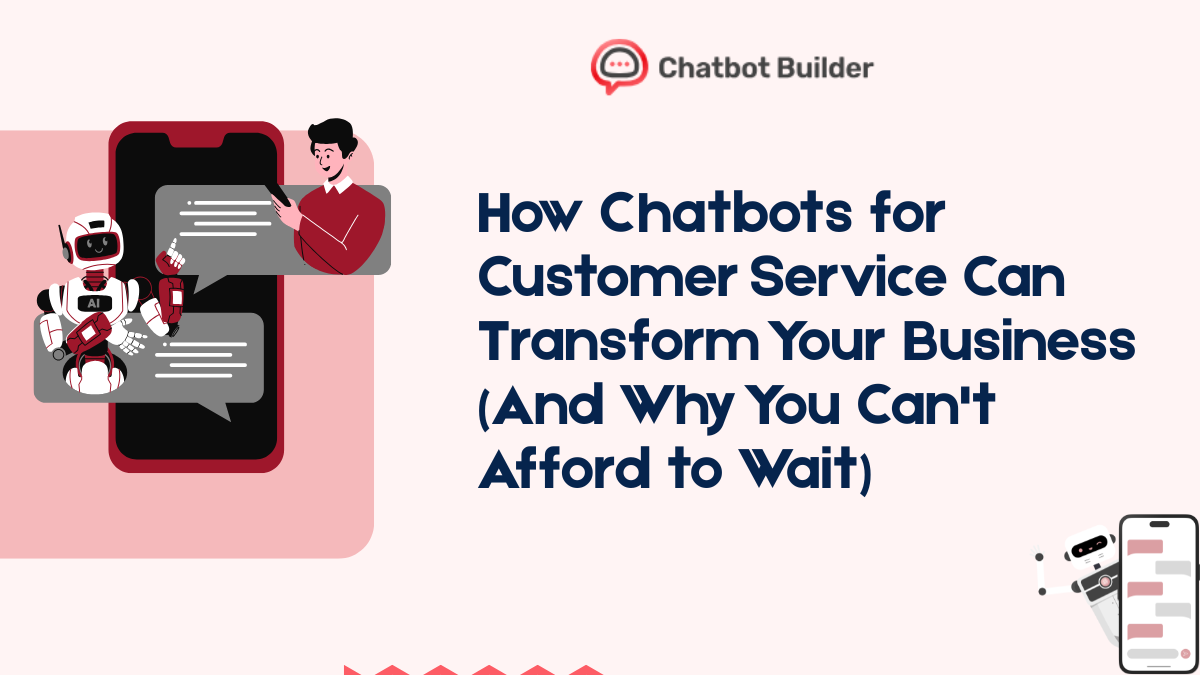
How Chatbots for Customer Service Can Transform Your Business (And Why You Can’t Afford to Wait)
Picture this: It’s Monday morning. You open your inbox, and there are four customer complaints sitting there from over the weekend. All four people asked the same basic question about shipping times. None of them got an answer for 60-plus hours. Two have already posted about it publicly.
That’s not really a staffing problem. It’s a systems problem. And here’s the part that stings, it was completely avoidable.
Chatbots are not a fix-all. A poorly built one is genuinely worse than having nothing at all. The businesses I’ve watched mess this up usually did one of two things: they over-built from the start and never launched, or they slapped together something generic and called it done. Neither works.
What works is using chatbots for customer service the right way: a focused, well-designed bot that knows exactly what it’s supposed to do and does it fast. When you get that right, the shift in your customer experience is hard to miss. And if you’ve been on the fence about whether chatbots for customer service are worth the effort for a business your size, let’s talk through what that actually looks like.
Your Customers Are Asking Questions at 11 PM. What Happens Then?
This is the most basic problem chatbots for customer service solve, and somehow it still gets undersold. A huge chunk of customer questions don’t happen during business hours. They happen when someone’s sitting on their couch after dinner, finally getting around to that purchase they’ve been thinking about all week.
They hit a question they can’t answer themselves. Maybe it’s about compatibility. Maybe it’s about whether a discount applies to what they’re looking at. Whatever it is, without a chatbot, that question just sits there. And by the time your team gets in the next morning, that customer either figured it out somewhere else, bought from a competitor, or forgot about it altogether.
A 2023 Salesforce study found 83% of customers expect an immediate response when they contact a company. Not by the end of the day. Right now. Most businesses can’t come close to delivering that with a human team alone, and a lot of them have just quietly accepted it as an unsolvable problem.
It’s not unsolvable. It’s a coverage problem, and chatbots are a coverage solution. “The question isn’t whether you can afford to put a chatbot in place. It’s whether you can afford the sales you’re losing every night without one.”
Two Minutes and 40 Seconds Is Longer Than It Sounds
That’s the industry average for live chat response times. Doesn’t sound catastrophic on paper. But I want you to think about what a person actually does while they’re waiting two-plus minutes for a little typing bubble to appear on your website chat.
They open a new tab. They search for the same product on Google. They land on your competitor’s site. You’ve basically paid for the ad to bring them to you and then handed them off to someone else because nobody got back to them fast enough.
This is one of the biggest reasons companies start looking at chatbots for customer service: the speed gap is real, and it costs money. The response is there before the customer has time to second-guess themselves. For anything that’s a quick factual question, stock availability, shipping options, return windows, account stuff, that speed genuinely moves the needle on whether the sale happens or doesn’t.
I’ve talked to store owners who saw their abandoned cart rate drop within weeks of putting a bot on their product pages. Not a complete overhaul of their site. Just faster answers at the exact moment someone’s deciding whether to trust you enough to buy.
What Happens When 400 People Need Help at the Same Time
Seems like everything is going normally on a regular Tuesday. Then something happens. A product goes live somewhere big, a sale doesn’t go well, a shipping delay causes half your orders to be delayed at once, and suddenly the whole thing falls apart under the weight of it all.
Your human staff can only have eight to ten conversations going at once before the quality begins to suffer. A chatbot has no ceiling. It handles 400 conversations with the same speed and accuracy as four. Your agents, meanwhile, aren’t wasting their capacity on “did my order ship yet”; they’re handling the complicated stuff that actually needs a person thinking through it.
This isn’t hypothetical. My furniture-obsessed chatbot had over 1,200 conversations on Black Friday this past year. His team handled 60, all of them escalations that genuinely needed a human. Nobody waited more than a few seconds for a first response all day. That’s the version of scaling support that doesn’t require hiring five people in October just to cover one week in November.
On Personalization, and Why Most People Get This Wrong
There’s a version of “personalized chatbot” that’s just using the customer’s first name in the greeting. That’s not personalization. That’s mail merge.
Real personalization is when the bot knows the customer bought your premium subscription eight months ago and routes their question differently than it would for a free trial user. It’s when a returning customer who’s had a billing issue before gets handled with a bit more care than a first-time buyer checking on delivery. It’s context-aware, not just name-aware.
Getting there takes actual work on your data setup and your conversation design. Any platform that promises you’ll have it up and running perfectly in 20 minutes is leaving something out.
The Money Part (Because That’s Usually What Moves the Decision)
Live agent support costs somewhere between $5 and $12 per contact, depending on channel. Chatbot interactions sit around $0.50 to $0.70. Run that across a business handling 4,000 support contacts a month. If your bot takes 60% of those, which is conservative, you’ve just moved 2,400 conversations from the expensive column to the cheap one. Every single month.
The tool cost pays for itself in the first few months for most businesses of that size. What takes longer is getting the conversation to flow sharply enough that the bot is actually resolving things, not just creating an extra step before someone emails you anyway. That first month or two of tuning is where most of the work is, and it’s worth doing right.
The Consistency Problem That Nobody Talks About Until It Bites Them
Here’s something I’ve noticed talking to business owners about their customer service operations: most of them genuinely don’t know what their agents are telling customers. Not because they’re not paying attention, it’s just impossible to audit hundreds of conversations a week when you’re also running everything else.
So one rep gives a generous reading of your refund policy. Another goes by the book. A third says whatever they think will close the ticket fastest. Three customers ask the same question about the same situation. Three different experiences of your brand.
A chatbot says what you told it to say. Every time. Without fail. Whether it’s the first conversation of the day or the five hundredth. For anything touching legal, compliance, or brand voice consistency, that predictability matters more than most people realize until something goes sideways. It’s one of the underrated reasons companies stick with chatbots for customer service long after the initial cost savings justify the decision.
What the Data From Those Conversations Actually Shows You
One thing that genuinely surprised me the first time I dug into chatbot analytics for a client: you learn things about your customers’ friction points that you had no way of knowing before.
Their chatbot conversations in the first month were people asking whether their product worked with a specific third-party tool. That question wasn’t answered anywhere on their site. One afternoon of adding that information to their product pages and FAQ cut that conversation category nearly in half the following month. The chatbot didn’t just answer the question; it told them the question was being asked way more than they thought and that the answer wasn’t where it needed to be.
That kind of insight just doesn’t exist when conversations are scattered across email threads and individual agent memories. Chatbot data is structured. It surfaces patterns. And those patterns, if you actually look at them, point you straight at the parts of your customer experience that need fixing.
Chatbotbuilder.net, What It Actually Does and Why It’s Worth Your Time
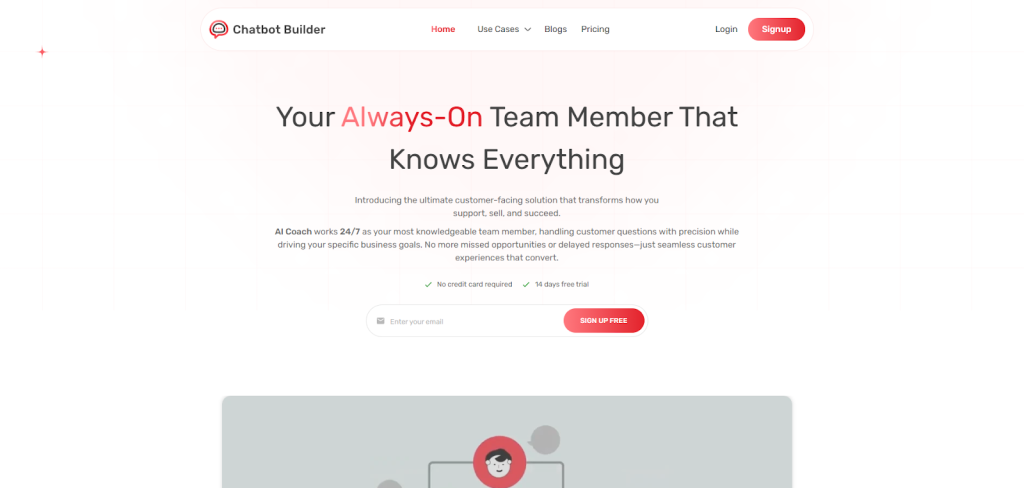
I want to talk about chatbotbuilder.net specifically here, because it addresses the thing that stops most small and mid-sized businesses from doing any of this: the assumption that building a real chatbot requires a developer, a big budget, and months of waiting.
It’s one of the most practical platforms out there for businesses that want to use chatbots for customer service without hiring a dev team or blowing through a big implementation budget. You build conversation flows visually, you see exactly what the customer will see, you drag things around, and you test it before it goes live. No writing code, no waiting on a developer’s availability, no six-week build timeline.
A few things worth knowing about how it works in practice:
- The visual builder lets you map out conversation paths the way you actually think about them.
- You deploy to your website, Facebook Messenger, Instagram, and SMS from one place. One build covers all the channels where your customers already are.
- It connects to your existing tools and your CRM. The bot pulls real data.
- When a conversation needs a human, the handoff carries full context. Your agent doesn’t start from zero; they pick up where the bot left off.
- The analytics dashboard shows you the numbers you actually need to know if it’s working.
Whether you’re a solo operator tired of losing leads at night or a team that needs to grow support capacity without growing headcount, it’s built to start simple and keep up as you scale. The first version you build doesn’t have to do everything. It just has to do a few things well. You add from there.
The Fastest Way to Get Started Without Getting Stuck
Most people overthink the first build. I’ve watched businesses spend four months in planning mode, designing a “complete” chatbot experience before a single real customer ever talks to it. By the time they launch, the scope has ballooned, the timeline is blown, and half the team is tired of the project before it’s even live.
Stop planning so much. Pick the three questions your support team answers most this week. Just three. Build a bot that handles those three questions well, not perfectly, and put it live. Real customer conversations will teach you more in two weeks than any planning doc ever will.
From there, you iterate. You add another flow. You connect it to your CRM so it can pull order history. You build out the lead qualification sequence you’ve been putting off. None of that needs to happen on day one. It needs to happen after you’ve seen real people use the thing you already built.
Tools like Chatbot Builder are genuinely built for this: fast first build, room to grow. That’s the combination that actually works for most businesses.
Ready to Build Yours? Thousands of businesses use Chatbot Builder to handle support, capture leads, and stay available for customers around the clock. Sign up for a 14-day free trial and see how fast you can get your first bot live.
Where This Leaves You
The businesses I’ve watched pull ahead on customer service in the last few years aren’t winning because they have bigger teams or more budget. They’re winning because they stopped letting good questions go unanswered after 5 PM. They stopped making customers wait two minutes for a response to a question that has a one-sentence answer. They stopped losing sales at the exact moment someone was ready to buy but couldn’t get a basic piece of information fast enough.
A chatbot done right fixes all three of those things. And “done right” doesn’t mean a six-month build with a developer, it means a focused first version that handles your most common questions well, deployed fast, then iterated on from real data.
That’s the whole playbook. Start narrow, go live, let your customers show you what to build next.
Head to chatbotbuilder.net and get your first bot up. Your Monday morning inbox will look noticeably different a month from now.
Frequently Asked Questions
When one handles the questions it’s built for and hands off cleanly when it’s not, customers tend to appreciate the speed over waiting for a human. The frustration people associate with chatbots, the looping, the dead ends, the refusal to connect you to a real person, comes from poorly designed ones.
With a no-code platform like chatbotbuilder.net, you can have a working bot in a single day. Start with the simple one. Real conversations will tell you what to add.
Any business where a relatively small set of questions makes up the bulk of support volume. E-commerce, SaaS, real estate, hospitality, and healthcare admin industries are where the same questions come up constantly. If your support team has a running joke about how many times a day they answer a specific question, that question should already be handled by a bot. That’s the fastest way to see ROI.
A few metrics tell you most of what you need to know: containment rate (what percentage of chats get fully resolved without a human stepping in), average response time, and whether your human ticket volume is trending down as your customer base grows. ChatbotBuilder.net has an analytics dashboard that shows you all of this without having to build your own reporting. If the containment rate is climbing and ticket volume is flat or falling, it’s doing its job.