


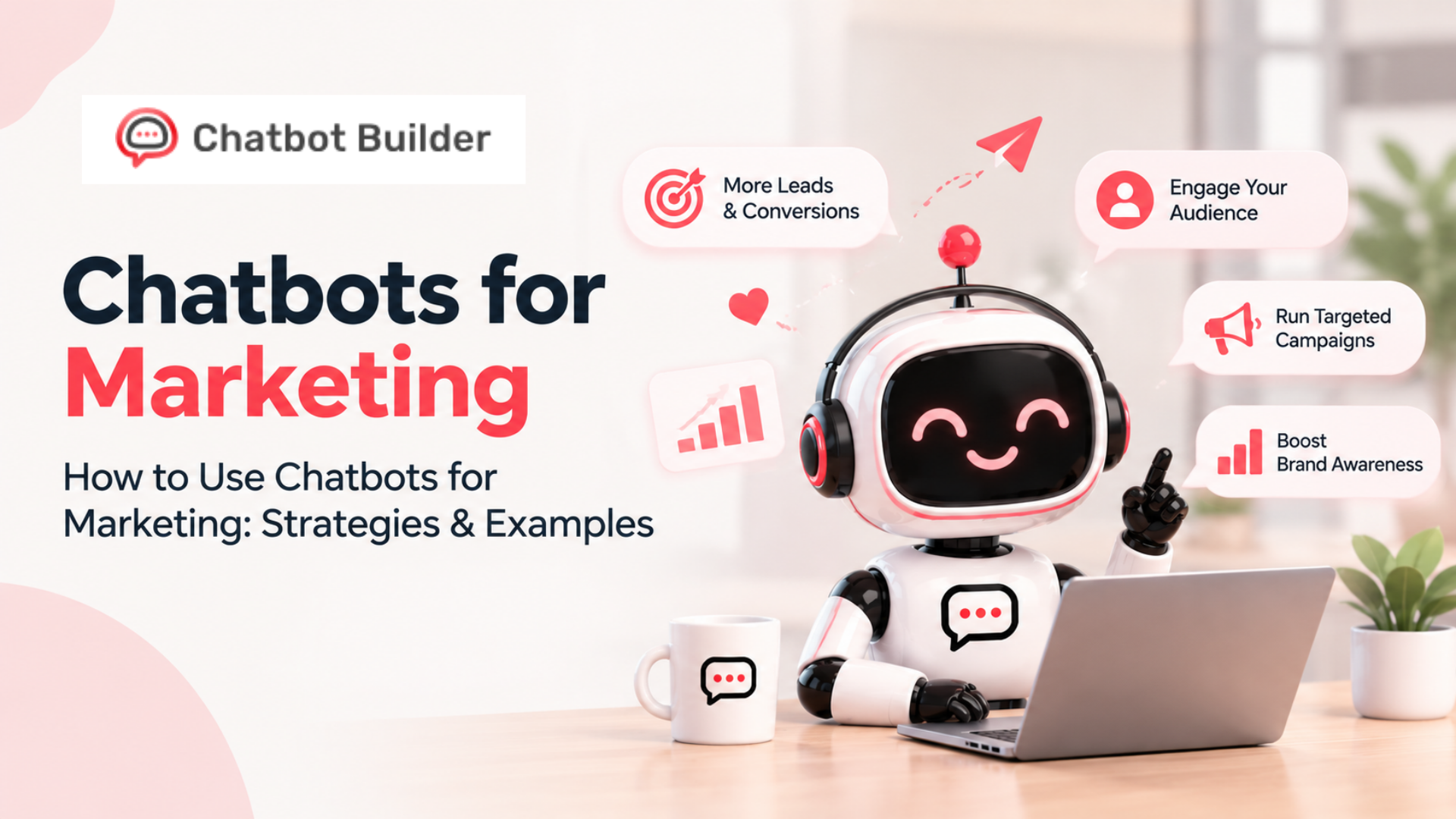
How to Use Chatbots for Marketing: Strategies & Examples
Introduction
Imagine a store with a fantastic window display, a lot going on outside, and no one behind the counter. People come in, look around, and leave. It’s how many corporate websites operate today. The traffic comes. The interaction doesn’t.
Chatbots are developed to fill the void. They are not there to replace anyone. They are simply there to greet customers at the counter, address simple queries, and pose questions to understand who came in.
Further down, you will see the capabilities of chatbots, 7 uses of chatbots, some examples of usage, things to avoid in order not to irritate people, and a hassle-free way to start.
What Are Chatbots for Marketing?
These are chatbots that engage with users who have not yet made any purchase. This is different from a support bot, where the issue would be “my order is late”. The marketing bot deals with “I am not sure if this is what I want”.
It asks. What are you looking for? How many people are there in your organization? When will you need this? Then it directs the user to something that can help him/her like some plans, products, reservation links, or someone from your organization.
These are found on websites, in Instagram and WhatsApp chats, in SMS flows, and even in follow-up emails. Chatbots for marketing purposes can be found anywhere your prospects visit, and the best ones feel like having a quick chat with an efficient stranger rather than filling out a form.
These chatbots are not magic, and in case you have confusing prices and an unimpressive offer, the chatbot will make that more obvious.
Tidio’s research found chatbot adoption across businesses grew 4.7 times between 2020 and 2025. That is not a trend that is going to reverse. The question is not whether chatbots for marketing belong in your funnel. It is which part of your funnel you are going to fix first.
Why Chatbots for Marketing Are Worth Your Time
- Nobody wants to wait around. The Harvard Business Review analyzed response rates of businesses to online leads, and the difference was huge. Businesses that responded within one hour had about seven times a better chance of qualifying the lead compared to those who waited. People need to sleep. Bots respond in the middle of the night.
- You know what the users think. After reading a month of chats, you will know exactly what the customers say, their concerns, and what pages are unclear to them. That is the information you would be paying for.
- Your team has more time to do important things. Shipping dates, free trials, student prices. Leave all this to the bot and let your team concentrate on the talks that require thinking.
7 Ways to Use Chatbots for Marketing
Don’t build all seven. Pick the one that fixes your leakiest part of the funnel and start there.
1. Qualify leads without a boring form
Forms are like homework. A chat fires out the same set of questions, but one by one, and for some reason it feels less strenuous. Once done, the bot will have categorized the person as being ready, curious, or just looking around. You will get to contact your prospect with relevant information instead of just an email address.
2. Change the greeting depending on the page
People who browse a blog post will be in a different state of mind compared to those who are in checkout mode. The best example of this would be “Choosing between Starter and Growth? Happy to explain the difference.” vs “Hi there! Need help?” Humans know when you understand what they’re doing.
3. Chase abandoned carts
Baymard Institute has been researching shopping cart abandonment rates for years now, and the average abandonment rate stands at around 70 percent. This leaves you with a huge pile of almost-customers. Even if it’s just one question, you might still get a few more back.
4. Help shoppers pick
Big product catalogs are overwhelming. Ask a few quick questions and make three relevant suggestions. This is how an effective shop assistant works.
5. Turn campaigns into conversations
Tests, competitions, pre-order forms. People who never completed a twelve-question form gladly fill in one question at a time, especially when using a mobile phone.
6. Book calls right inside the chat
Every click you ask for results in lost leads. When your lead asks to see a demo, show available times and book one right away.
7. Ask for feedback, briefly
Two questions after purchasing. Rate it, check the box. You will receive more honest responses than from any long questionnaire.
A chatbot that meets that visitor mid-session with a relevant question changes the math. According to Litslink’s 2025 chatbot statistics, chatbot leads convert at three times the rate of standard form submissions. That difference comes from engagement quality, not from chatbot novelty.
Real-World Examples of Chatbots for Marketing
- A meal kit service provider: The homepage chatbot asks about family members, allergies, and frequency of cooking, and suggests the subscription plan. No more guessing, and the company gets to know who signed up.
- A dental clinic: Usually, people look online when the clinic is closed, and there’s nobody to answer the phone. The chatbot answers any questions related to services provided, insurance issues, and schedules an appointment for the next morning. Everything is set before the receptionist even arrives.
- Invoicing software: One user spends a lot of time on the pricing page. The chatbot asks whether the person uses the software themselves or manages a team and then directs him to the appropriate package and shows a video guide.
- Fitness studio: Some users clicked the Instagram advert and ended up in a chat asking about their goals and availability. It offers a free class based on the schedule. No forms here either.
Nothing fancy here. But that’s what a good chatbot does – it solves one specific problem for you right when you need it.
Mistakes That Ruin Chatbots for Marketing
- The robot pretends to be a person. Users will recognize that. When they do, there goes the trust. Tell them that it is a robot, but keep the mood upbeat.
- Jumping out too early. When a chat box pops out as soon as the web page loads, it is like the sales rep stands at the door, trying to stop you from leaving. Let users have some time, or wait until they need help.
- A closed loop. When the robot repeats the same three responses, users will get mad. Offer users an escape: a real person, email address, or website.
- Unfresh information. The robot quotes an outdated price or promotion; then it becomes both a customer support issue and a credibility one. Some person should be responsible for the copy.
- One and done. This is your first draft. Just read a couple of conversations now and then and find out what the robot does wrong.
How to Launch Your First Bot
Pick one objective. More qualified leads from the pricing page or fewer abandoned carts? Identify the point at which people leave most frequently and create a mini chatbot to serve them there.
Craft the first message and the few questions it will ask. Make them brief. Then choose the result: a booking, an email, a product page, or handing the customer off to someone else. A conversation without a conclusion is idle chatter.
Test drive it yourself before rolling it out to the rest of your visitors. Make spelling errors, answer out of the blue, ask questions it shouldn’t know. Roll it out to a portion of your traffic and observe before going live.
How to Measure Results
Find the number corresponding to the goal set for them. The performance of a lead bot will be measured by the percentage of chats that are qualified leads and which of these your sales team takes up. That of a cart bot will be judged by recovered revenue.
After this, go through the transcripts. If there are repeated questions, then your web copy has a gap in it somewhere. Drop-offs in one place mean that part needs rewriting. It is the most inexpensive research you can conduct.
Where ChatbotBuilder Comes In
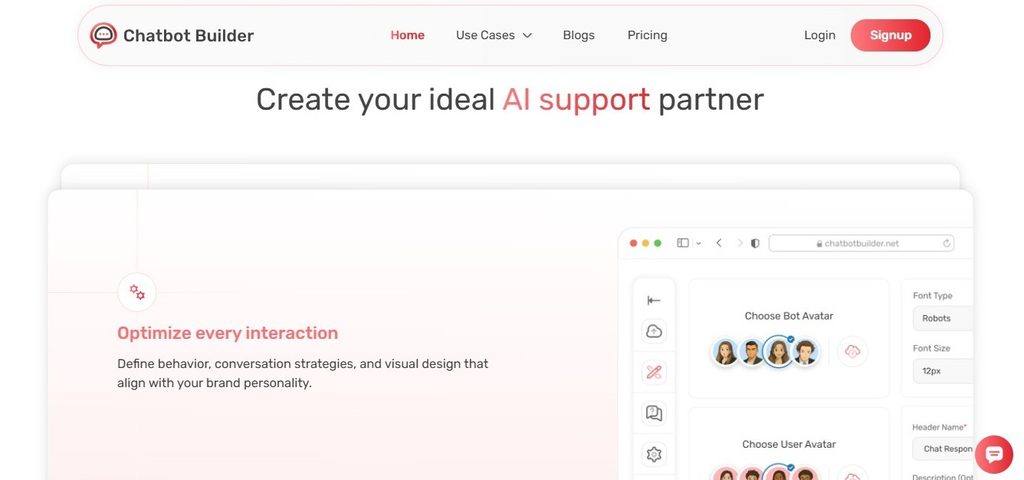
To use chatbots for your marketing campaigns without needing a programmer, there’s ChatbotBuilder. It helps you configure conversations that will qualify your prospects, answer their questions about products, recover abandoned carts, and hand off people to actual human beings once the bot reaches its limits. Its approach relies on conversational flows rather than predefined scenarios, which is necessary once actual users start chatting.
Visit: https://chatbotbuilder.net/
Final Thoughts on Chatbots for Marketing
The bot cannot fix a bad offer and a confusing website. It can lure in visitors when they’re intrigued, address whatever’s stopping them, and pass on the qualified leads to your team.
This is why version one needs to be lean. Focus on one problem at a time. Let the conversations guide you towards building the next feature. The successful implementation of chatbots in marketing does not belong to the companies with a cool bot.
Sign up for the 14-day free trial and start exploring the tool.
FAQs
What do marketing chatbots do?
Marketing chatbots are interactive tools that engage with visitors and prospects by answering questions, qualifying leads, suggesting products, and guiding them towards signing up or buying something. They mostly operate at the beginning of the customer journey.
How can a chatbot help generate leads?
The bot can substitute a form or complement it. It asks some simple questions regarding their needs, budget, and timing, gets their contact information, and refers qualified leads to your sales team with the context of the chat.
Can marketing chatbots be used by small businesses?
No, usually small businesses get quick results because the bot works for hours and solves the problem that the business could not solve on its own. Even the simplest bot that answers the most common questions and gets email addresses makes the difference.
Will chatbots take the place of marketers and salespeople?
No, they will perform repetitive tasks during the first interactions and answer simple questions, leaving you to work on more important issues.
What should I look at to understand whether my chatbot works?
Depending on your goal. Common ones include conversation-to-lead rate, qualified leads passed to sales, recovered cart revenue, flow completion rate, and the questions asked most often.