


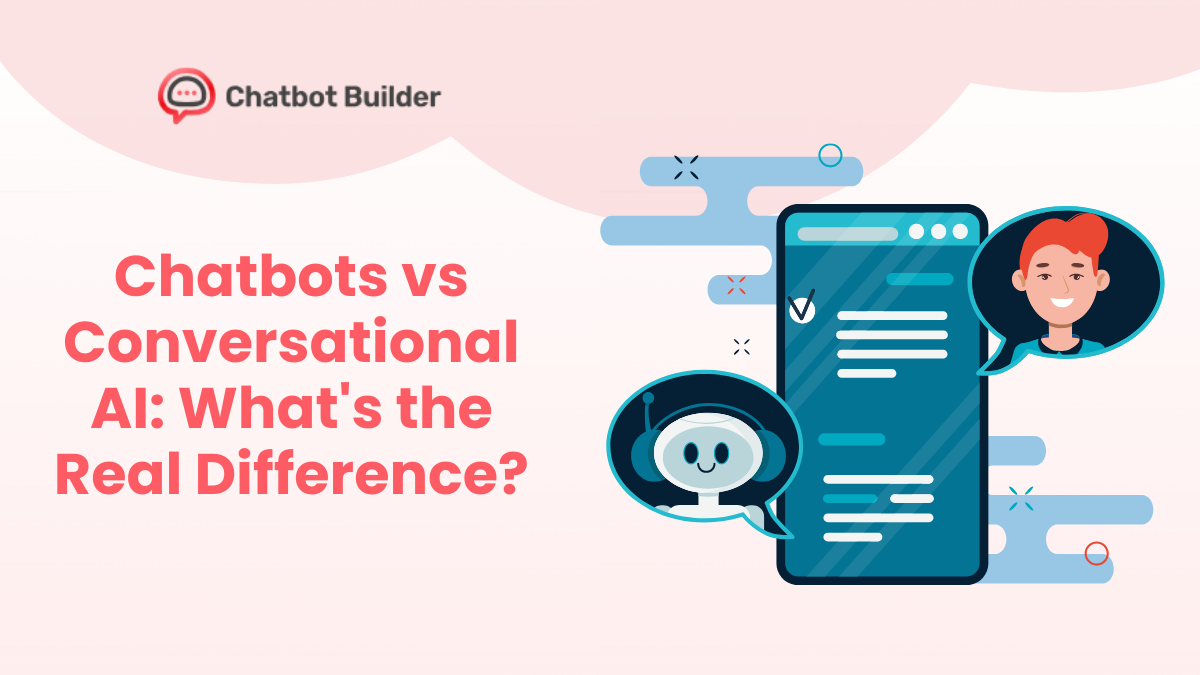
Most people use these words as if they are interchangeable. They’re not.
And if you’re trying to build a business and automate your customer conversations, using the wrong word is going to cost you. Either you’ll spend months setting up something that’s way too complicated for what you’re doing, or you’ll set up something that’s too simple and wonder why it keeps frustrating your customers.
So let’s get into it.
The Chatbot: Older Than You Think
A guy named Joseph Weizenbaum built a chatbot called ELIZA in 1966, and people actually thought they were talking to a therapist. It was just pattern matching. Input X, output Y. That’s basically still how most chatbots work today, just with a much better interface.
A chatbot runs on rules. You define the scenarios. You write the responses. Someone types “what are your hours?” and the bot fires back your hours. Somebody types “I need help with my order,” and the bot asks for their order number. Clean, fast, predictable.
Where it falls apart is when a human goes off-script. It either takes you back to the main menu or says something like “Try again.” Which, if you’ve ever been a customer, you know is deeply annoying.
That said, for many businesses, chatbots do exactly what they need to. If your customers are mostly asking the same 15 questions, a good chatbot handles that better than any human could at volume. Tools like Chatbot Builder are built for exactly this situation. No code required. You drag, you drop, you deploy. Your customers start getting answers at 2 am without you lifting a finger.
Conversational AI Is a Different Thing Entirely
Conversational AI figures out the terrain.
Behind the scenes, it’s doing natural language processing to figure out what a person really wants to say, as opposed to what they actually typed. It’s because it uses machine learning algorithms that have been trained on a huge amount of text, so it can handle a problem it’s never seen before.
When you ask conversational AI, “I got the wrong thing in my shipment, and I’m going on vacation in two days.”
What should I do?” It won’t break. It recognizes several problems with that statement and addresses them.
This is how Google Assistant, Siri, and Alexa respond.
It’s what powers the better AI agents that are showing up everywhere right now.
The difference isn’t just technical. It shows up in the actual customer experience. Conversational AI conversations that feel good feel like real conversations. You can change your mind in the middle of a conversation. You can ask a follow-up question three messages later, and it still knows what you’re talking about.
Most chatbots treat every message as if it’s the first message they’ve received.
Here’s How to Think About the Gap
Say you run a restaurant.
A chatbot handles reservations perfectly. “I need a table for four on Friday at 7.” Done. Confirmed. No human required.
But what if someone messages you and says, “We’re coming in for my dad’s birthday, he’s got a nut allergy, can you do something special?” That’s three different requests wrapped into one casual message. A chatbot is probably going to respond to one part of it and miss the rest.
The chatbot does the predictable thing well. Conversational AI reads the whole message, flags the allergy, acknowledges the celebration, and maybe even asks if you’d like a birthday dessert arranged. That’s not a flowchart. That’s actual understanding.
The gap matters most at the edges. The straightforward stuff? Chatbots are fine. Great, even. It’s when conversations get complicated, layered, or unexpected that conversational AI earns its place.
What Each One Actually Does Well
Chatbots are good at:
Answering FAQs at scale. You’ve got 300 people a day asking the same support questions. A chatbot answers all of them without your team touching a single ticket.
Collecting information. Lead gen forms are boring. A chatbot asking the same questions in a conversational format gets higher completion rates.
Booking and scheduling. The back-and-forth of appointment setting is exactly the kind of structured interaction chatbots were made for.
Routing. “Are you a current customer or new to us?” and then sending people where they need to go. Simple, effective.
Conversational AI is good at:
Handling complex support. When the variables are high and the situations are unpredictable, you need something that can think on its feet.
Open-ended sales conversations. The kind where the customer isn’t sure what they need yet and needs to be guided dynamically.
High-volume enterprise use cases. When you’re dealing with thousands of unique customer situations daily, scripted responses stop working fast.
The Cost and Complexity Question
This is where a lot of people get tripped up when comparing chatbots vs conversational AI.
Building and maintaining a proper conversational AI system is a real project. You’re talking about training data, ongoing monitoring, fine-tuning, and integrations. It’s not something you spin up in an afternoon.
A chatbot built on something like chatbotbuilder.net? You can have it live today. Seriously. Customize your flows, connect them to your website or your WhatsApp, and you’re done. For most small and mid-sized businesses, this is the move. The returns show up fast, and keeping it running doesn’t take much.
The question to ask yourself is: are my customer conversations mostly predictable, or are they mostly complex and variable?
If they’re predictable, a chatbot will serve you well and save you a lot of money over hiring people to answer the same questions on loop.
If they’re genuinely complex, that’s when you start looking at conversational AI options, or at platforms that are building AI capabilities into their chatbot tools, which is happening more and more.
The Two Are Starting to Overlap
Here’s what’s interesting about where this is heading.
The chatbots vs conversational AI debate is getting less clear-cut every year. The line between them is getting fuzzy. Platforms like chatbotbuilder.net are integrating AI features directly into the chatbot builder, so you’re not forced to pick one or the other.
This is genuinely the smart play for most businesses. You get the reliability and low cost of rule-based automation for the bulk of your conversations, and you’ve got AI handling the exceptions.
The businesses that are going to win here aren’t the ones that pick the fanciest technology. They’re the ones who know which tool to use on which problem. That’s it.
Which One Does Your Business Actually Need?
Here’s a fast way to figure it out.
Write down the last 20 conversations your support team had with customers. Now look at how many of them were basically the same question. If 15 out of 20 were predictable and repetitive, you need a chatbot. Go build one. Today.
If most of those 20 conversations were unique, layered, and required a lot of back-and-forth judgment calls, you’re in conversational AI territory.
Most businesses, when they actually do this exercise, find out they need a chatbot. Their conversations are more repetitive than they think. And once they automate those, their human team can focus on the 5 conversations that were genuinely complex.
That’s where Chatbot Builder fits in. It’s built for businesses that want to stop paying people to answer the same question 200 times a day. You pick the flows that match your actual customer conversations, not some generic template that kind of fits, and you deploy across the channels your customers are already using.
Go Build Something
You’ve been sitting on this long enough.
If you don’t have any chat automation running in your business right now, you’re leaving money on the table. Leads are coming to your site after hours and leaving because no one answered. Customers are sending the same question your team has answered a hundred times this month.
Understanding chatbots vs conversational AI is step one. Step two is actually doing something about it.
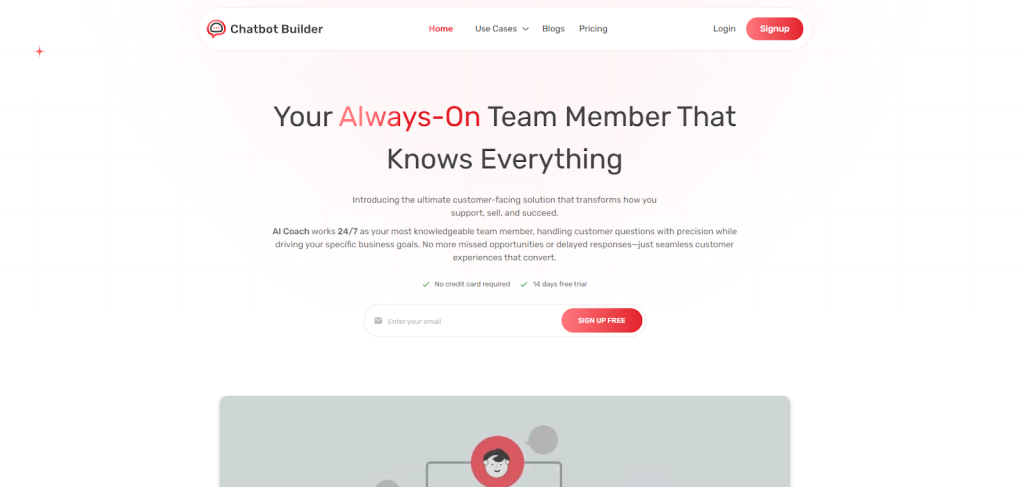
Sign up at chatbotbuilder.net and get your first bot live this week. The platform is built so you don’t need a developer or a big budget. You need about an hour and a willingness to actually do the thing.
Your support team will really thank you.
Frequently Asked Questions
If you have relatively simple use cases, a chatbot will be sufficient. You will need conversational AI if your use cases are sufficiently complex and varied, and if you have the resources to develop and maintain it properly.
You can implement a chatbot in a few hours using a no-code platform such as chatbotbuilder.net. No coding skills required, no lengthy setup process.
Simple chatbots use keyword matching and fail when customers use different wording. More advanced chatbot platforms now support some natural language processing, so they can better detect intent even when customers use different wording.
E-commerce, healthcare, real estate, hospitality, and SaaS companies see the fastest adoption. Any industry where customers ask the same questions repeatedly, need to book or schedule something, or go through a qualification process before buying is a strong fit.