


Why Chatbot Builder is the Twilio Alternative You Didn’t Know You Needed
Twilio has been the go-to name in conversational technology for years. Big enterprises use it. The documentation is extensive. The platform can handle virtually any communication need imaginable. For developers building custom solutions, it’s often the first choice.
However, what most marketing teams discover after a few months with Twilio is that it’s not actually designed for them. The platform is a developer infrastructure that happens to have the pieces needed for building chatbots, not a chatbot solution itself. That distinction matters more than you’d think.
A typical lead qualification bot takes 2-3 weeks to build on Twilio, requiring developer resources, API knowledge, and ongoing technical maintenance. The same bot can be up and running in chatbotbuilder.net within hours, built by someone with zero coding experience. That’s not an exaggeration; it’s the fundamental difference between these two approaches to conversational marketing.
The Twilio Reality: Powerful But Complex
There’s no denying Twilio’s capabilities. The platform supports SMS, voice calls, video chat, WhatsApp integration, and dozens of other communication channels. The flexibility is genuinely impressive for teams with strong technical resources.
However, Twilio requires thinking in webhooks, JSON responses, serverless functions, and error handling. Even with Studio (Twilio’s visual flow builder, which costs extra), users are still configuring technical widgets and dealing with developer concepts. Every campaign change needs to go through engineering. Want to update a single question in your conversation flow? That’s a development ticket with a multi-day turnaround.
For marketing teams operating on tight timelines, this creates constant bottlenecks. When a product launch needs an interactive bot on the landing page within a week, the technical dependencies become deal-breakers. The platform simply wasn’t designed with marketing agility in mind.
What Makes Chatbot Builder Different
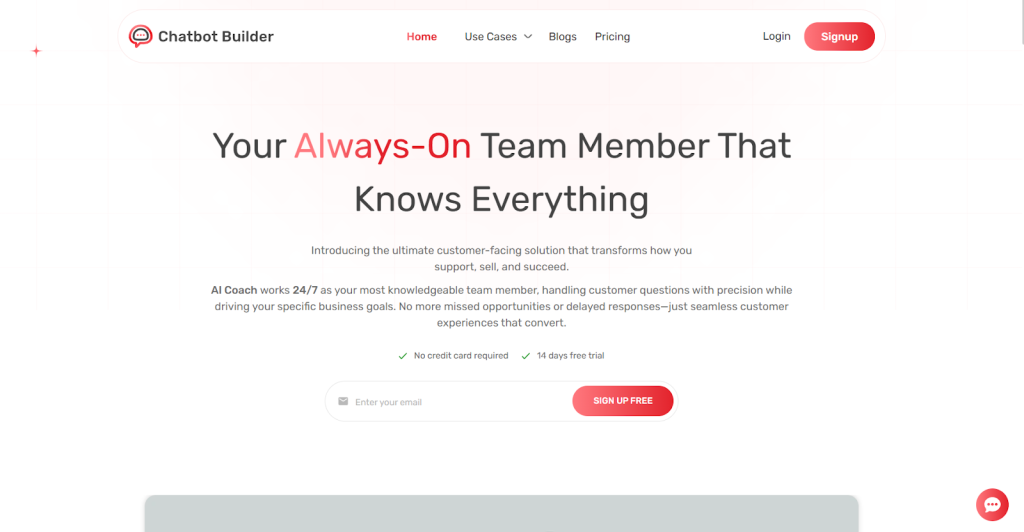
Chatbot Builder takes a fundamentally different approach to building conversational experiences. Instead of code-first infrastructure, it provides a visual platform specifically designed for marketing use cases.
Visual Building That Actually Makes Sense
The difference shows up immediately when building your first bot. Twilio users spend time writing functions and configuring hosting infrastructure. Chatbot Builder users drag conversation blocks around, connect them with arrows, and see their flow come together visually.
Testing happens right in the builder, no deployment process, no staging environment, no crossing fingers. When something breaks in the conversation flow, it’s immediately obvious where and why. Compare that to debugging Twilio implementations, which often means digging through logs and tracing API calls.
A multi-step qualification flow with conditional branching takes a few hours in Chatbot Builder. The same functionality in Twilio requires developer time, testing cycles, and careful error handling. Both approaches work, but the speed difference is dramatic.
Launch Speed Matters for Marketing Campaigns
Product launches don’t wait for three-week development cycles. When marketing needs an interactive bot live by Friday, the platform choice becomes critical.
Chatbot Builder campaigns can go from concept to live deployment in a day. Templates provide 70% of common use cases, customization happens through the visual interface, and integrations connect in minutes. A campaign that would take 4-6 weeks through Twilio’s development process launches on time.
That speed advantage compounds over multiple campaigns. Instead of building 3-4 chatbot experiences per year, marketing teams can test and deploy 15-20. More experiments mean more data, better optimization, and ultimately better results.
Marketing Features Built In, Not Bolted On
This difference separates marketing-focused chatbot platforms from developer infrastructure. Chatbot Builder includes features that matter for campaigns:
Lead scoring happens automatically based on conversation responses. High-value prospects get flagged immediately. Responses sync to HubSpot or Salesforce with full context. Completion rates, drop-off points, and conversion metrics appear in built-in dashboards.
A/B testing different conversation flows? Duplicate the bot, modify what needs testing, and split traffic. Done in minutes, not development sprints.
Every one of these features would require custom development on Twilio. Technically possible, but resource-intensive. Marketing teams need these capabilities out of the box, not as backlog items for the engineering team.
Pricing Comparison: Chatbot Builder vs Twilio
Understanding true platform costs requires looking beyond subscription fees.
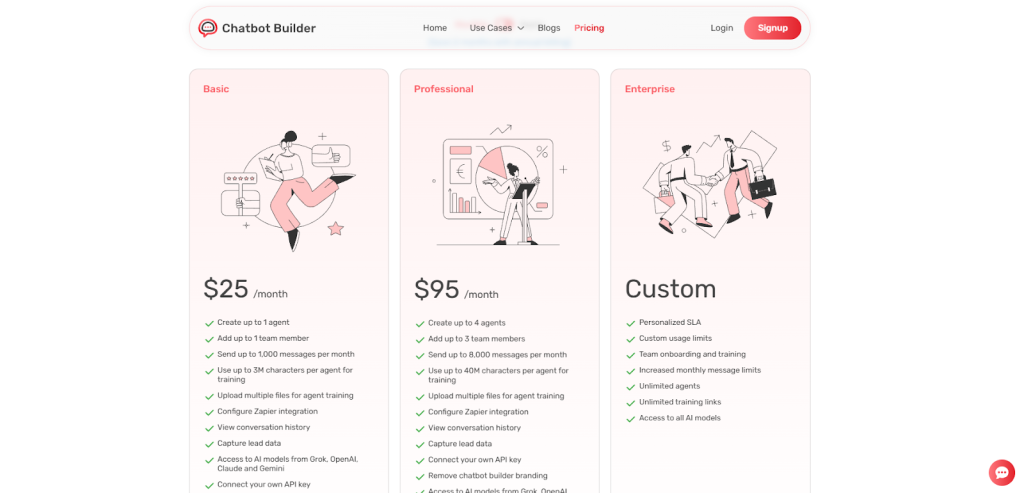
Chatbot Builder’s Plan Structure
Tiered pricing based on conversation volume:
- Starter: $25/month (up to 1,000 conversations)
- Professional: $95/month (up to 8,000 conversations)
- Enterprise: Custom pricing for high-volume needs
All plans include the visual builder, integrations, analytics, and support. No usage surprises, no hidden fees.
Twilio’s Actual Cost Structure
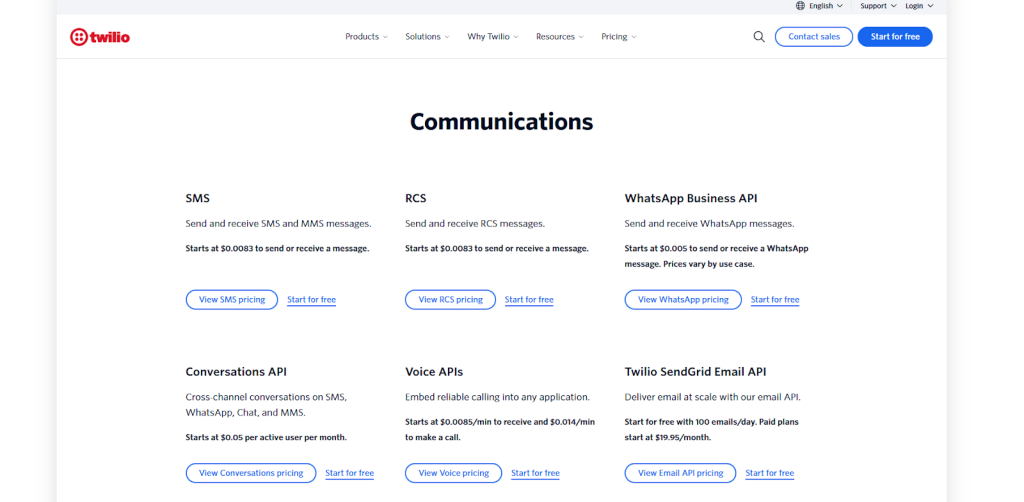
The pay-as-you-go model charges for multiple components:
- SMS messages: $0.0083 each (US domestic, higher internationally)
- WhatsApp conversations: $0.005-$0.042 depending on region
- Phone numbers: $1-2+ per month each
- Flex: $150/month base fee plus per-user charges
- Studio visual builder: $0.0025 per flow execution
Real-world example: A moderate campaign with 10,000 SMS sends, three phone numbers, and basic chat functionality costs roughly $900 in platform fees. Add $8,000 in developer time for building and maintaining the infrastructure, and monthly costs hit $8,900 for a single campaign.
Total Cost of Ownership
When evaluating chatbot platforms, calculate everything:
Twilio: Platform fees + developer costs + ongoing maintenance = $10,000-15,000+ per project
Chatbot Builder: Monthly subscription managed in-house = $200-800 typically
The 60-70% cost difference is why many marketing teams are switching away from developer-dependent solutions.
Where Twilio Still Has Advantages
Fair comparisons require acknowledging where each platform excels. Twilio maintains clear advantages in specific scenarios:
Unlimited Customization: Need functionality that doesn’t fit any template? Twilio allows building anything because developers control the code. Chatbot Builder operates within its flexible visual framework.
Omnichannel Depth: Twilio handles every communication channel: voice systems, video conferencing, complex IVR flows, SMS across 180+ countries. Chatbot Builder focuses on web chat, SMS, and major messaging platforms.
Enterprise Scale: Organizations sending millions of messages daily need battle-tested infrastructure. Twilio has proven reliability at that level. Chatbot Builder is scaling rapidly.
Practical Use Case Breakdown
The decision between these chatbot platforms depends on specific needs:
Chatbot Builder Excels For:
- Lead qualification on landing pages
- Post-event follow-up campaigns
- Product recommendation quizzes
- Customer feedback collection
- Event registration flows
- Support automation for marketing
- Any scenario where speed matters more than custom functionality
Twilio Works Better For:
- Custom SMS systems with complex routing logic
- Voice verification in authentication systems
- Video consultation booking with specialized calendar integration
- Projects requiring functionality that no pre-built platform offers
The pattern is consistent. Chatbot Builder wins for standard marketing use cases. Twilio wins when custom development is unavoidable.
Chatbot Builder vs Twilio: Which Platform Fits Your Needs?
After examining both platforms across dozens of campaigns, the decision framework becomes clear:
Choose Chatbot Builder When:
- Developer resources aren’t available or are constantly overbooked
- Campaign launches need to happen quickly without technical dependencies
- Predictable pricing matters for budget planning
- Marketing-specific features matter more than infinite flexibility
- Moving fast matters more than having complete technical control
- CRM integration and analytics need to work immediately
Choose Twilio When:
- Dedicated development resources are available
- Highly customized functionality is required that doesn’t fit standard patterns
- Complete technical control outweighs speed considerations
- Longer development timelines are acceptable
For approximately 90% of marketing teams, Chatbot Builder delivers better ROI through faster launches and eliminates technical dependencies.
Final Thoughts: Choosing the Right Platform
Comparing chatbot platforms like Chatbot Builder and Twilio isn’t about declaring one objectively better. They solve different problems for different audiences.
Twilio provides a powerful, flexible, and deeply technical platform. Chatbot Builder offers a marketing tool built specifically for conversational campaigns.
Developers building custom communication solutions still benefit from Twilio’s flexibility. But marketers who need to deploy conversational experiences quickly, capture leads effectively, and demonstrate measurable results often find Chatbot Builder more practical.
The distinction matters. After seeing both platforms in action across multiple campaigns, Chatbot Builder has proven itself as a legitimate option for marketing teams prioritizing speed and ease of use over technical customization.
Ready to see the difference for yourself? Chatbot Builder offers a free trial that lets you build and test your first chatbot without any commitment. Experience the visual builder, explore the pre-built templates, and see how quickly you can launch conversational campaigns compared to developer-dependent platforms. Start your free Chatbot Builder trial today and discover why marketing teams are making the switch from complex API solutions to purpose-built chatbot platforms.
The best platform isn’t determined by the longest feature list. It’s the one that helps teams move faster and achieve their specific goals. For most marketing organizations, that’s increasingly a purpose-built solution designed for how marketers work, not developer infrastructure requiring technical translation.
Frequently Asked Questions
No, they serve different purposes. Chatbot Builder focuses on marketing chatbots, while Twilio provides communication infrastructure for building anything. For standard marketing chatbots, Chatbot Builder works great, but Twilio remains better for voice systems, video conferencing, or highly specialized custom builds.
None. Most users build their first bot within 1-2 hours. Twilio requires programming knowledge, APIs, and webhooks, genuinely technical stuff that Chatbot Builder eliminates.
Native integrations with HubSpot, Salesforce, Mailchimp, Zapier, and others work immediately through simple authentication. Setup takes minutes. With Twilio, you’d need developers to custom-build each integration using APIs.
Yes, it scales automatically during traffic increases without performance issues. Campaigns with thousands of simultaneous conversations run smoothly. Twilio also scales well but requires developers to architect for it, whereas Chatbot Builder handles it automatically.
Chatbot Builder includes encryption, GDPR tools, and access controls, but heavily regulated industries (healthcare, finance) should carefully evaluate specific requirements. Twilio offers more extensive compliance certifications. Always consult legal and compliance teams before deploying in regulated sectors.